Incontinentia Pigmenti
- Inheritance pattern
- X linked dominant
- X-inactivation leads to blaschkoid distribution
- Severe phenotypes have random X-inactivation whereas mild have skewed inactivation
- Lethal in males, unless XXY karyotype (Klinefelter)
- Both sexes may have mosaic form
- Mutation → leads to abnormal apoptosis regulation
- Loss of function of NF-kB essential modulator (NEMO)/IKBKG leads to inactivation of the NF-kB
- IKBKG deficient keratinocytes are suscetible to apoptosis/necrosis due to the loss of protection against cell death
- Immune cell activation and eosinophil recruitment
- Endothelial inflammation and further damage (colateral damage)
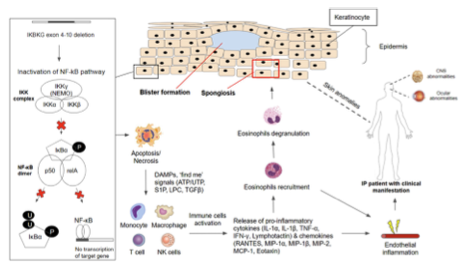 DOI doi:10.1038/nrdp.2016.35
- Clinical manifestations
- 4 stages: pathology varies with stage, patient may have multiple stages at one time
- Vesicular
- 0-4 months
- eosinophilic spongiosis/vesicles, apoptotic keratinocytes
- Verrucous
- 2-6 months
- papillomatosis, hyperkeratosis and acanthosis of the epidermis; apoptotic cells
- Hyperpigmented
- 6 months - adult
- pigment incontinence
- Hypopigmented: atrophic, epidermal atrophy
- Other manifestations of IP are highly variable
- Skin - scarring alopecia in blaschkoid distribution, subungueal tumors (resemble SCC)
- Eyes - retinal vascular anomalies (blidness)
- Teeth - hypodontia, anodontia, peg-shaped
- CNS - seizures, intellectual delay
- Breast - hypoplasia, supernumerary nipples
- Abordagem
- Pedir oftalmologia, neurologia, estomatologia
 Made with Bullet